kg and pieces

Counting Scale With Printer

Punit can add kilogram-to-piece conversion for suitable consistent products. The touchscreen uses an approved average piece weight to estimate quantity, then prints weight, pieces, product identity and barcode on the label.

WhatsApp your requirementor call +91 97253 53523
Punit Counting Scale With Printer – touchscreen based weighing system with barcode label printer
Real Punit product Touchscreen · Platform · Printer · Punit ERP
LIVE WEIGHT124.850 kg
Configured quotationMatched to the application
0.200 mg - 10 tonRange across configurations
5-year warrantySubject to quotation terms
Industrial + retailApplication configured
01 / FIT

Who should consider this system?

Start with the operational outcome. Hardware selection follows the material, handling method and data journey.

02 / WORKFLOW

From stable weight to a traceable transaction.

Each step is controlled, visible and designed around the operator.

  1. 01

    Select the product and approved conversion

  2. 02

    Capture stable net weight

  3. 03

    Calculate the estimated piece quantity

  4. 04

    Review tolerance or rounding

  5. 05

    Print and store kg plus pieces

03 / SYSTEM

Specify the complete system.

Final values depend on the actual material, operating environment and required integration.

ConversionOptional kg/pcs mode
ControlProduct-specific average piece weight
OutputWeight, pieces and barcode on label
InventoryKg and/or pieces by approved stock rule
LimitationAccuracy depends on consistent individual piece weight
04 / OUTPUT

What the label can carry.

Use a readable layout and a stable transaction identity. Print only the fields operators and downstream systems genuinely need.

Net weight in kgCalculated piecesAverage piece weightProduct and batchTolerance or rounding ruleBarcode identity
PUNIT INSTRUMENTPRODUCTION LABEL

ALUMINIUM COIL · 6061

Gross
148.250 kg
Tare
23.400 kg
Net weight
124.850 kg
||| || |||| | ||| || ||||
TXN · 260711-0042 · LINE 02
REAL OUTPUT · LIVE SYSTEM PROOF

Labels printed by Punit weighing scales.

Customer-supplied photographs of live printed output across industries. These examples show how counting scale with printer can carry the fields each factory actually needs—not a fixed generic label.

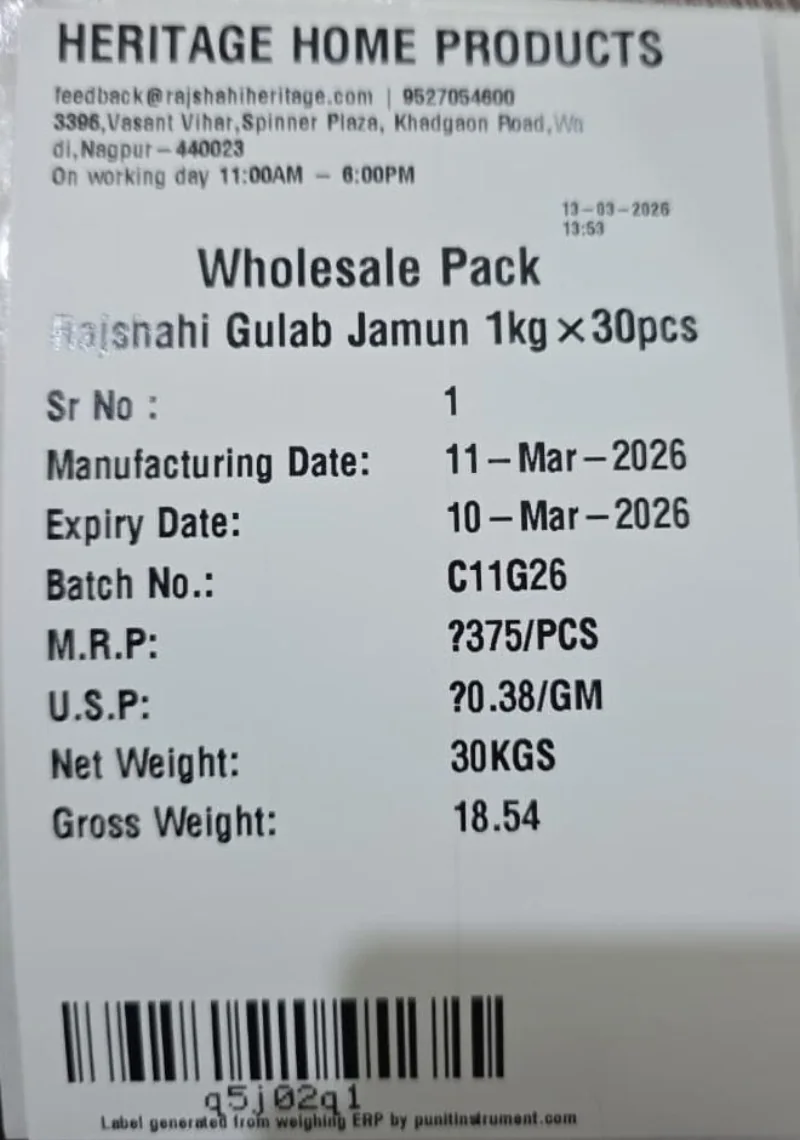
Real fmcg food & sweets barcode weight label printed from a Punit weighing scale with printer
FMCG food & sweetsWholesale-pack label with manufacturing and expiry dates, batch, MRP, gross/net weight and barcode.
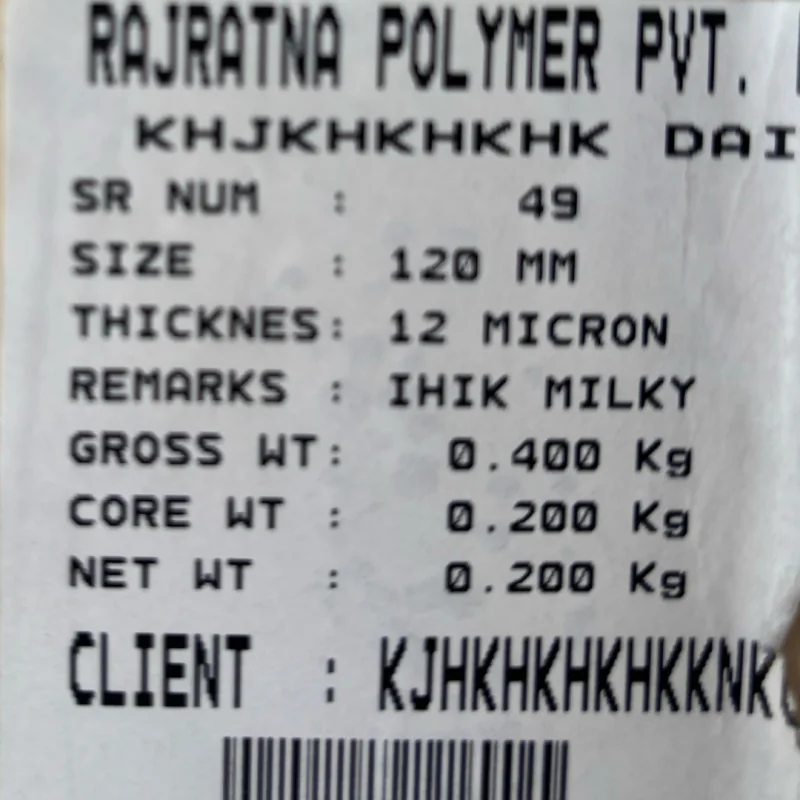
Real plastic & shrink-film rolls barcode weight label printed from a Punit weighing scale with printer
Plastic & shrink-film rollsRoll size, micron, remarks, gross, core and net weight with customer and barcode.
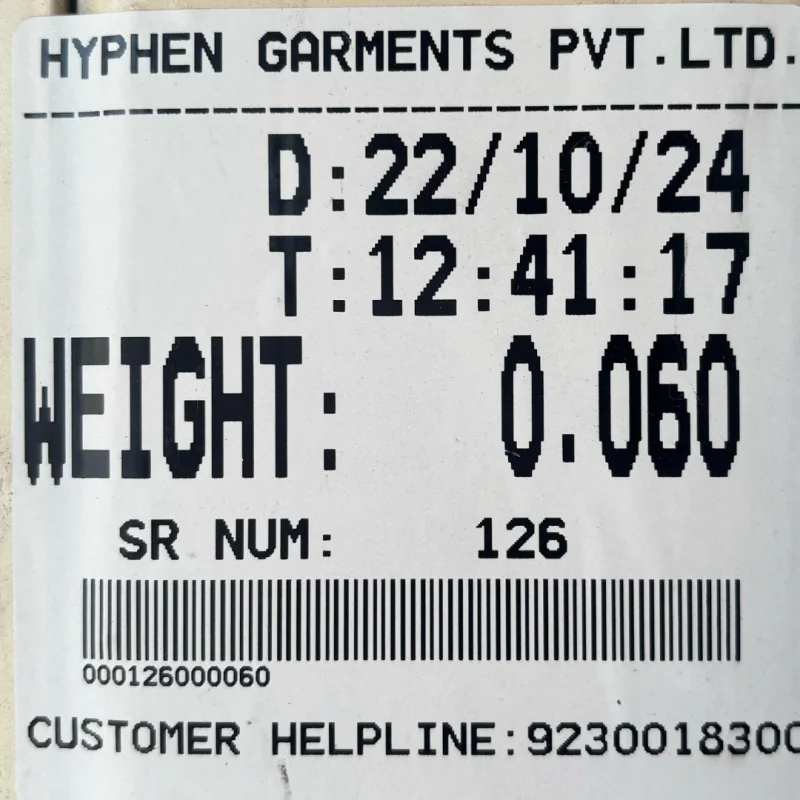
Real textile & garments barcode weight label printed from a Punit weighing scale with printer
Textile & garmentsDate, time, serial number, accepted weight, customer reference and barcode.
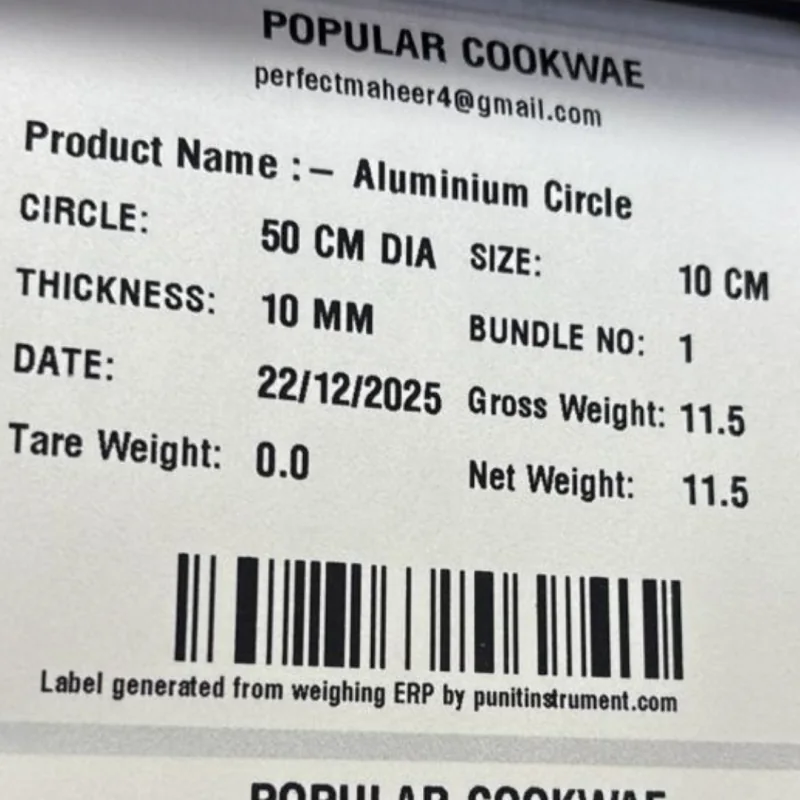
Real aluminium cookware barcode weight label printed from a Punit weighing scale with printer
Aluminium cookwareDiameter, thickness, bundle number, gross/tare/net weight and barcode identity.
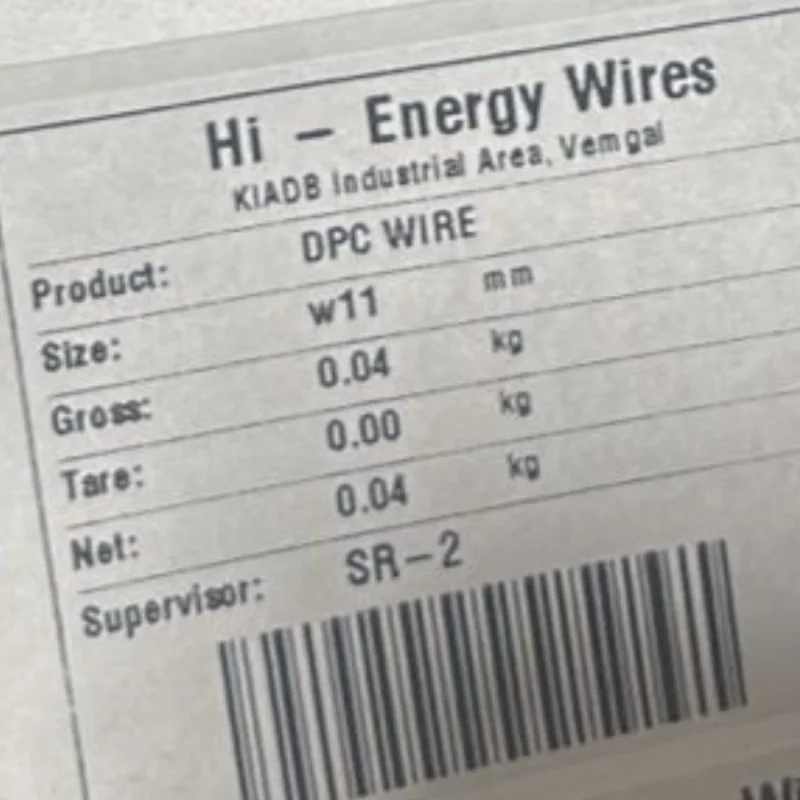
Real wire & cable bobbins barcode weight label printed from a Punit weighing scale with printer
Wire & cable bobbinsWire size, gross, tare and net weight, supervisor and barcode.
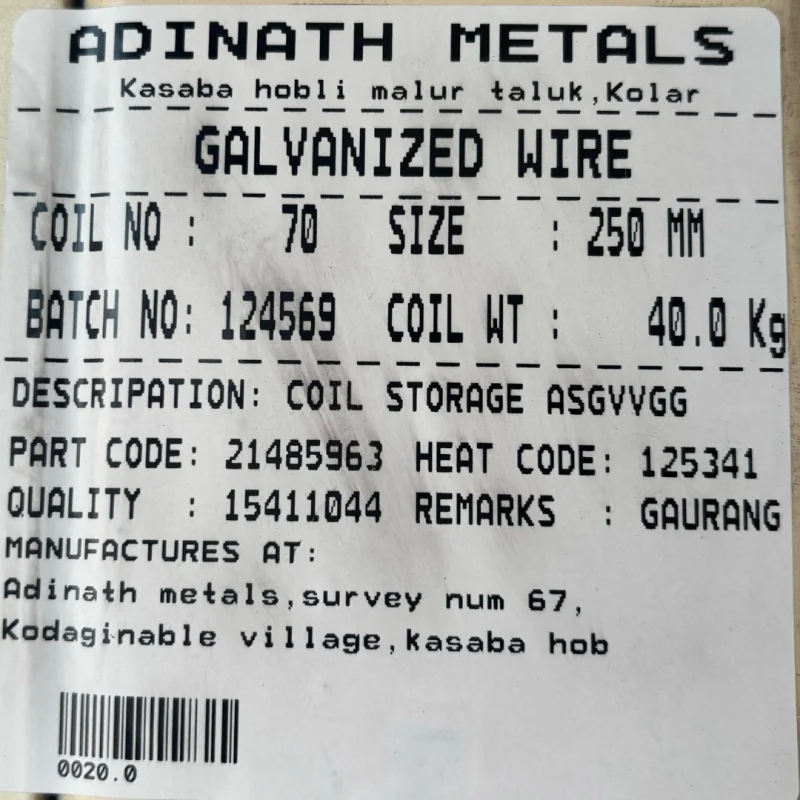
Real galvanized wire coils barcode weight label printed from a Punit weighing scale with printer
Galvanized wire coilsCoil number, size, batch, coil weight, part code, heat code, quality and barcode.
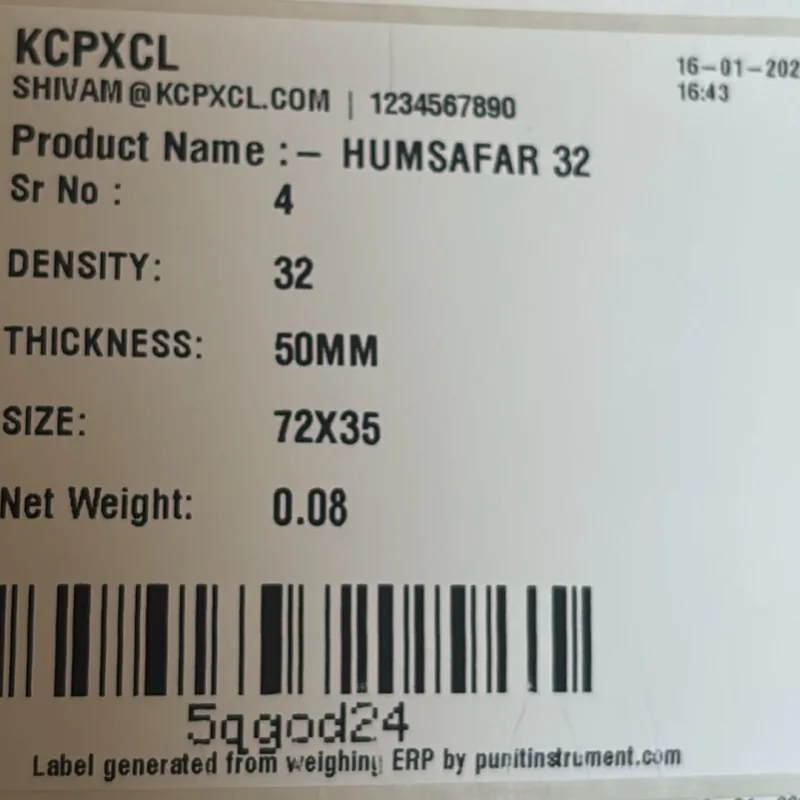
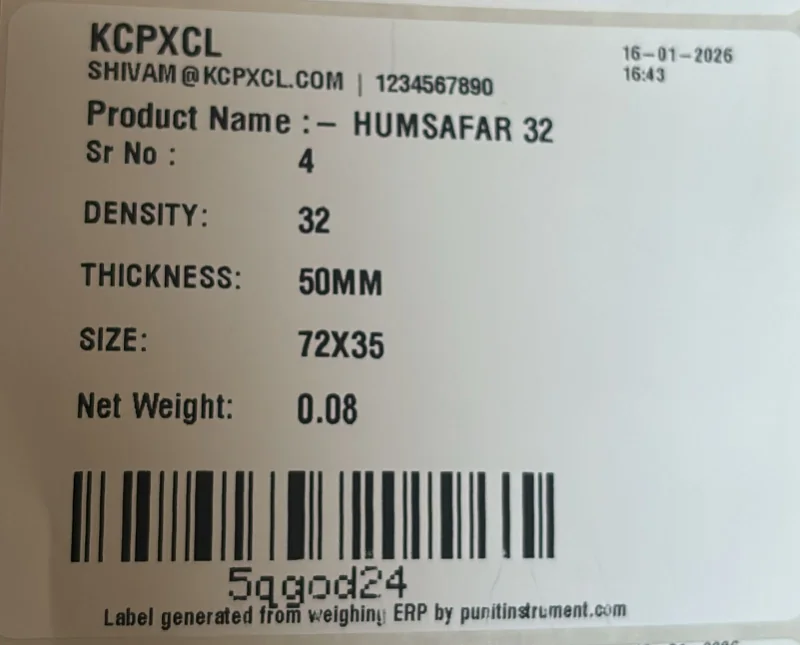
Real foam & insulation sheets barcode weight label printed from a Punit weighing scale with printer
Foam & insulation sheetsDensity, thickness, size, serial number, net weight and barcode.
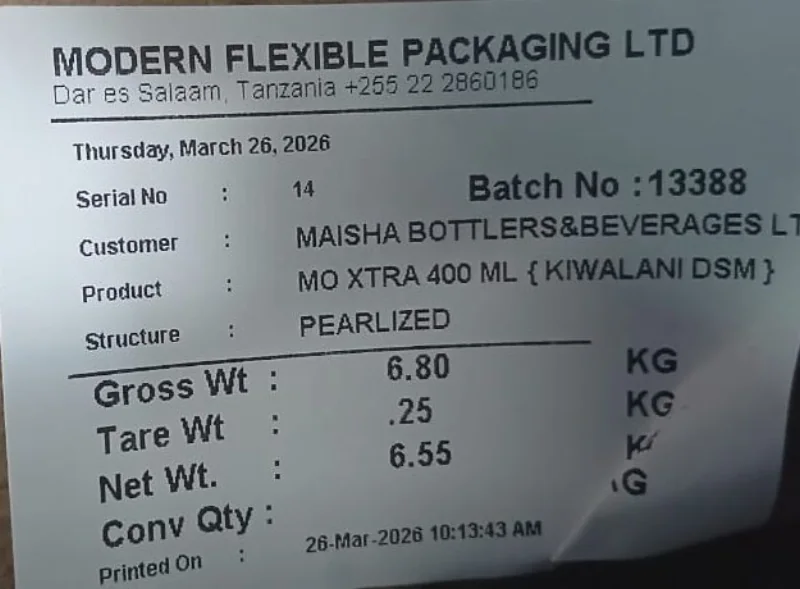
Real flexible packaging barcode weight label printed from a Punit weighing scale with printer
Flexible packagingCustomer, product structure, batch, gross/tare/net weight and conversion quantity.
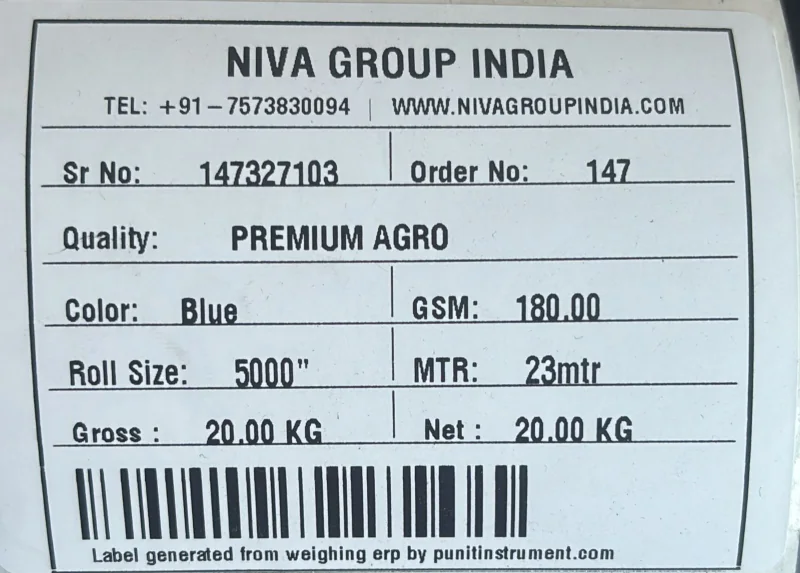
Real non-woven fabric rolls barcode weight label printed from a Punit weighing scale with printer
Non-woven fabric rollsQuality, colour, GSM, roll size, metres, gross/net weight and barcode.
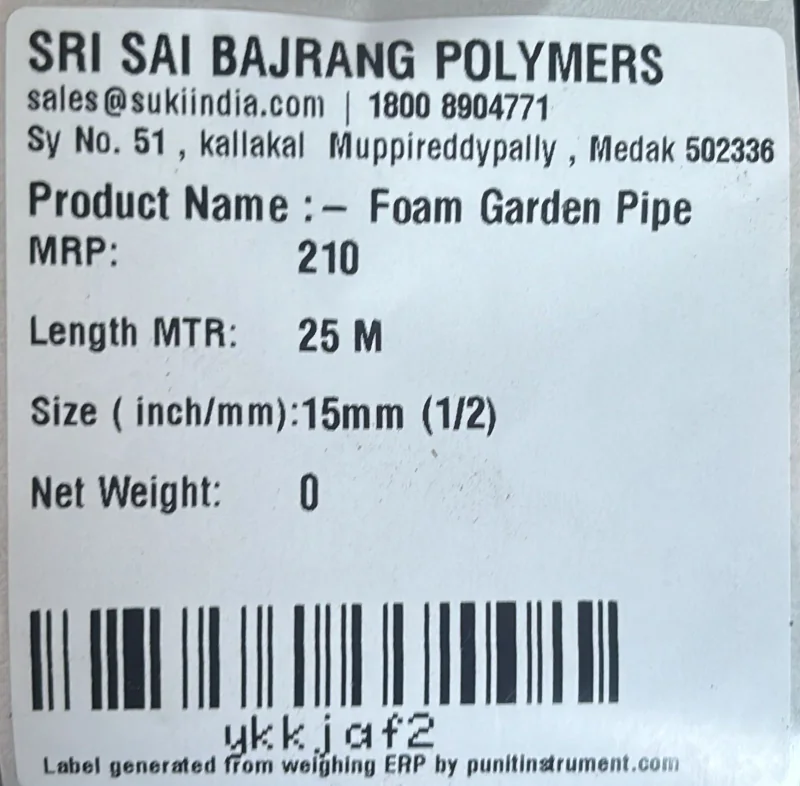
Real polymer & garden pipes barcode weight label printed from a Punit weighing scale with printer
Polymer & garden pipesProduct, MRP, length, pipe size, net weight and barcode.
Real foam product manufacturing barcode weight label printed from a Punit weighing scale with printer
Foam product manufacturingDensity, thickness, dimensions, net weight and scan-ready barcode.
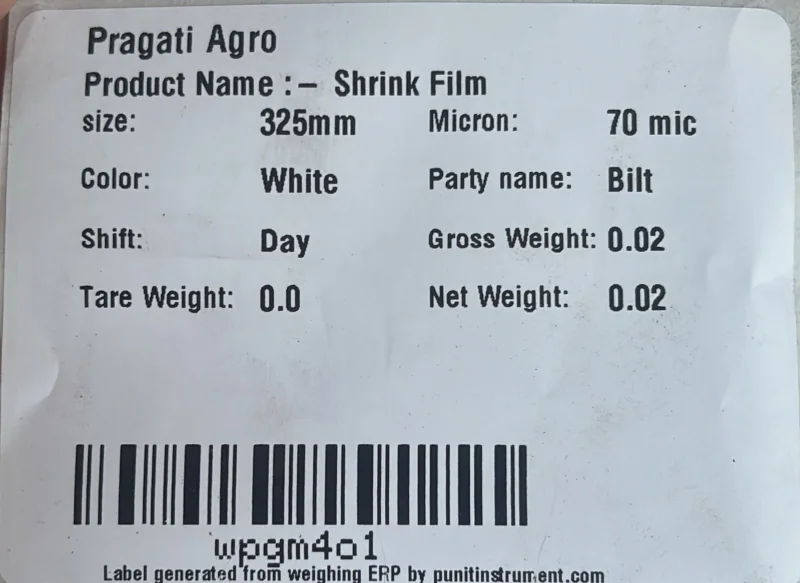
Real shrink-film production barcode weight label printed from a Punit weighing scale with printer
Shrink-film productionSize, micron, colour, party, shift, gross/tare/net weight and barcode.
Real tarpaulin & technical textiles barcode weight label printed from a Punit weighing scale with printer
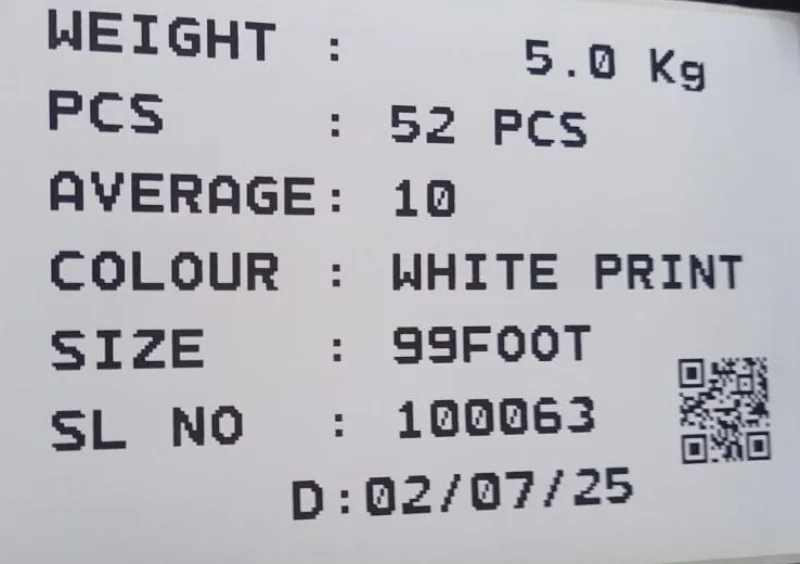
Tarpaulin & technical textilesWeight-to-pieces conversion, average weight, colour, size, serial and QR code.
Real electrical cable packaging barcode weight label printed from a Punit weighing scale with printer
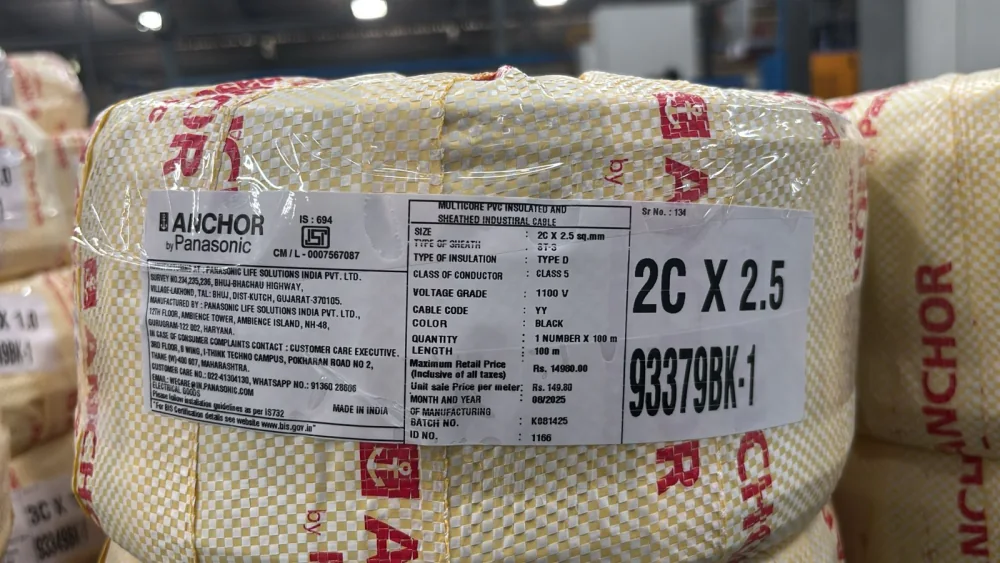
Electrical cable packagingCable specification, quantity, length, MRP, manufacturing batch and package identity.

Real printed samples supplied by Punit. Customer names and fields appear as printed; final label size, layout, barcode type and data fields are configured for each approved application.

05 / BUYER NOTE

Counting accuracy must be validated

A weight-based piece count is an estimate. Variations in individual component weight, contamination and rounding can change the result, so the customer must approve the conversion and tolerance for each product.

FEATURES FOR THIS REQUIREMENT

What this counting scale with printer must solve.

Features are selected for this page's buying intent—not copied as a generic list.

01

fasteners, washers and machined components with consistent unit weight

This requirement supports the goal to use an approved average piece weight to convert a stable net weight into an estimated quantity and print or store the result. It must be demonstrated with the actual product, label and operator flow.

02

pack-count verification before sealing cartons

This requirement supports the goal to use an approved average piece weight to convert a stable net weight into an estimated quantity and print or store the result. It must be demonstrated with the actual product, label and operator flow.

03

stores issue and return of homogeneous components

This requirement supports the goal to use an approved average piece weight to convert a stable net weight into an estimated quantity and print or store the result. It must be demonstrated with the actual product, label and operator flow.

04

production reporting where kg and estimated pieces are both required

This requirement supports the goal to use an approved average piece weight to convert a stable net weight into an estimated quantity and print or store the result. It must be demonstrated with the actual product, label and operator flow.

05

smallest piece weight relative to scale readability

This requirement supports the goal to use an approved average piece weight to convert a stable net weight into an estimated quantity and print or store the result. It must be demonstrated with the actual product, label and operator flow.

06

reference sample size and average-piece-weight method

This requirement supports the goal to use an approved average piece weight to convert a stable net weight into an estimated quantity and print or store the result. It must be demonstrated with the actual product, label and operator flow.

HARDWARE + SYSTEM SPECIFICATION

Published configuration for counting scale with printer.

Final values are confirmed in the quotation after reviewing the application.

ConversionOptional kg/pcs mode
ControlProduct-specific average piece weight
OutputWeight, pieces and barcode on label
InventoryKg and/or pieces by approved stock rule
LimitationAccuracy depends on consistent individual piece weight

Normal scale vs Punit touchscreen system

Operator outputNormal: weight display onlyPunit: guided product, weight and print workflow
Data entryNormal: handwritten or manually typedPunit: compatible live scale capture
TraceabilityNormal: no package identityPunit: barcode/QR label and transaction history
Stock & dispatchNormal: separate registersPunit: inventory, scanning and dispatch reports
ConnectivityNormal: isolated indicatorPunit: hybrid cloud/offline Punit ERP
EXPERIENCE + TECHNICAL REVIEW

Reviewed from both sides of the system.

Last technically reviewed 18 July 2026 · Product scope is confirmed in the final quotation.

Gaurang VakhariaDirector · Weighing Systems

Approximately 30 years of experience reviewing weighing capacity, platform, loading, installation and Legal Metrology considerations.

Saumya VakhariaTechnology · Automation

Approximately six years of experience reviewing Punit ERP, printing, inventory, inward, dispatch and connected weighing workflows.

Read the Punit story, address and credentials →
LIVE PRODUCT VIDEO

Watch the weighing scale print a real label.

See the complete Punit system in operation: live weight capture, touchscreen controls, product details and printed output. Use the video to understand the hardware before requesting a configuration for counting scale with printer.

DIRECT ANSWER

Piece count is a calculated value, not direct optical counting. Accuracy depends on part consistency, sample size, tare, scale readability and the approved operating method.

01 / IN-DEPTH

A direct answer for counting scale with printer

Technical-commercial investigation for a scale that estimates pieces from weight and prints the result. Searchers need to understand reference-piece weight, accuracy limits, product memory and label/report output.

Piece count is a calculated value, not direct optical counting. Accuracy depends on part consistency, sample size, tare, scale readability and the approved operating method.

This page serves a fastener, component, packaging or stores team counting consistent parts by weight. The required result is to use an approved average piece weight to convert a stable net weight into an estimated quantity and print or store the result. Closely related wording includes “piece counting scale with printer”, “kg to pcs weighing scale”, “weight and count printing machine”, but the product should be selected from the actual transaction rather than the keyword alone.

02 / IN-DEPTH

Where counting scale with printer fits

Fasteners, washers and machined components with consistent unit weight. For this application, the buyer should first resolve smallest piece weight relative to scale readability. Acceptance should include a live check to create the reference from a representative sample. This links the search requirement to an observable result rather than a generic feature claim.

Pack-count verification before sealing cartons. For this application, the buyer should first resolve reference sample size and average-piece-weight method. Acceptance should include a live check to test light, nominal and heavy pieces from the same lot. This links the search requirement to an observable result rather than a generic feature claim.

Stores issue and return of homogeneous components. For this application, the buyer should first resolve container tare and zero discipline. Acceptance should include a live check to compare counted output with a manual count. This links the search requirement to an observable result rather than a generic feature claim.

Production reporting where kg and estimated pieces are both required. For this application, the buyer should first resolve acceptable count tolerance and exception handling. Acceptance should include a live check to repeat after changing containers or tare. This links the search requirement to an observable result rather than a generic feature claim.

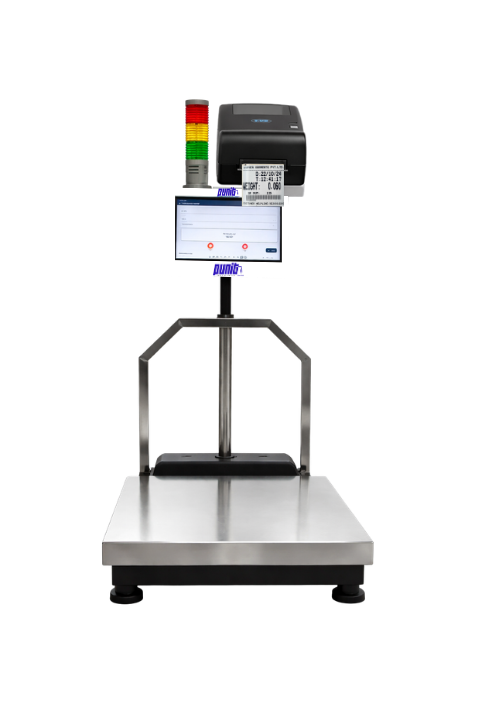
Punit Counting Scale With Printer with 10.1-inch touchscreen, platform and barcode label printer
Actual Punit touchscreen weighing scale configuration. Final platform, capacity, printer and mounting are selected for the application.
03 / IN-DEPTH

Configuration decisions specific to this search

Smallest piece weight relative to scale readability is decision 1. It affects whether the system can use an approved average piece weight to convert a stable net weight into an estimated quantity and print or store the result. Record the selected approach in the quotation and connect it to the relevant operator step, printed output and stored record.

Reference sample size and average-piece-weight method is decision 2. It affects whether the system can use an approved average piece weight to convert a stable net weight into an estimated quantity and print or store the result. Record the selected approach in the quotation and connect it to the relevant operator step, printed output and stored record.

Container tare and zero discipline is decision 3. It affects whether the system can use an approved average piece weight to convert a stable net weight into an estimated quantity and print or store the result. Record the selected approach in the quotation and connect it to the relevant operator step, printed output and stored record.

Acceptable count tolerance and exception handling is decision 4. It affects whether the system can use an approved average piece weight to convert a stable net weight into an estimated quantity and print or store the result. Record the selected approach in the quotation and connect it to the relevant operator step, printed output and stored record.

Printed fields for kg, pieces, batch and operator is decision 5. It affects whether the system can use an approved average piece weight to convert a stable net weight into an estimated quantity and print or store the result. Record the selected approach in the quotation and connect it to the relevant operator step, printed output and stored record.

04 / IN-DEPTH

How to verify the proposed system

Test 1: create the reference from a representative sample. Use real products, actual labels and the intended operator sequence. Capture the expected display, printed result and software status so suppliers are compared against the same acceptance condition.

Test 2: test light, nominal and heavy pieces from the same lot. Use real products, actual labels and the intended operator sequence. Capture the expected display, printed result and software status so suppliers are compared against the same acceptance condition.
Test 3: compare counted output with a manual count. Use real products, actual labels and the intended operator sequence. Capture the expected display, printed result and software status so suppliers are compared against the same acceptance condition.
Test 4: repeat after changing containers or tare. Use real products, actual labels and the intended operator sequence. Capture the expected display, printed result and software status so suppliers are compared against the same acceptance condition.
Test 5: document products for which weight-based counting is unsuitable. Use real products, actual labels and the intended operator sequence. Capture the expected display, printed result and software status so suppliers are compared against the same acceptance condition.
05 / IN-DEPTH

Why Punit for Counting Scale With Printer

Piece count is a calculated value, not direct optical counting. Accuracy depends on part consistency, sample size, tare, scale readability and the approved operating method. This is the central difference Punit should demonstrate for this topic.

The solution is relevant when the business needs to use an approved average piece weight to convert a stable net weight into an estimated quantity and print or store the result. It is not the correct choice when the process only needs an unrelated billing, dynamic checkweighing or conveyor function that has not been included in scope.

Bring one representative material, target label, daily volume and required report to the demonstration. The final platform, capacity, readability, printer, scanner, Punit ERP modules, installation and support can then be confirmed without relying on assumptions.

06 / QUESTIONS

Practical questions, answered.

Seven intent-specific answers for buyers evaluating this exact requirement.

Can it print both kg and pieces?+

Yes, when kg-to-piece conversion is configured and approved for the product.

Is the piece count exact?+

It depends on how consistent individual piece weights are.

Can every product use the same conversion?+

No. Average piece weight is normally product-specific.

What should be tested before buying a counting scale with printer?+

Use your real material and confirm create the reference from a representative sample, test light, nominal and heavy pieces from the same lot, compare counted output with a manual count, repeat after changing containers or tare, document products for which weight-based counting is unsuitable. A quotation should define the expected result for each acceptance check.

Which configuration factors matter most for counting scale with printer?+

Review smallest piece weight relative to scale readability, reference sample size and average-piece-weight method, container tare and zero discipline, acceptable count tolerance and exception handling, printed fields for kg, pieces, batch and operator. Final capacity, readability, platform, printer and software scope must be selected together.

What makes the Punit approach different for this requirement?+

Piece count is a calculated value, not direct optical counting. Accuracy depends on part consistency, sample size, tare, scale readability and the approved operating method.

How can I get an exact quotation?+

Share the material, maximum load, platform footprint, required readability, sample label, daily volume and software workflow. Punit will then confirm the bill of materials, installation and commercial scope.

Discuss your application

Build the right weighing workflow before choosing hardware.

Share your material, capacity, label and software requirement directly with the Punit product team.

QUICK ENQUIRY

Get the right counting scale with printer configuration

Share your application. The completed enquiry opens in WhatsApp so you can send it directly to Punit.

No payment required. Configuration and final price are confirmed after application review.